Jul 12, 2010

Education: The Most Powerful Antidote Part 2

Comparing Education Systems: Pakistan and Indonesia

International security issues due to the 9/11 terrorist attacks and wars in the Middle East have placed madaris under scrutiny. Madaris often bear the brunt of the blame when it comes to identifying sources of radicals and terrorists as militaristic education often breeds narrow, extremist worldviews. In a recent publication issued by The Brookings Institution, Corinne Graff and Rebecca Winthrop argue that while there is a clear link between madaris and militancy in the extremist epicenter of Pakistan, there is a need to look at the bigger picture and identify the flaws in the Pakistani education system as a whole.

Many madaris continue to have established links with suicide terrorists and groups such as Sipha-e-Sahaba—however, only a tiny fraction of Pakistani students attend madaris. According to The Brookings Institution, 65% attend public schools, 30% attend private schools and about 5% attend madaris. These statistics dispel the myth of widespread madrasah attendance. Furthermore, the fact that more parents are choosing to send their children to private schools raises alarming questions about the quality of public school education in Pakistan. Graff and Winthrop also highlight the importance of enrollment rates: A study suggests that an increase in one year of average schooling of the population leads to a reduction of about 3.6% of likelihood of conflict.

Unlike the madaris in Pakistan, madaris in Indonesia operate with a national curriculum under the oversight of the Ministry of Religious Affairs. Currently, there are about 40,000 madaris in Indonesia, of which around 4,000 are state-owned. The curriculum of primary (basic) and secondary education must include religious education, citizenship, languages, mathematics, natural science, social science, art and culture, physical education and sport, skills/vocational education, and local content. They teach the national curriculum and use extended hours for the purpose of religious education. This curriculum has been in effect since 2006, and students have been able to move freely between religious schools and national public schools due to the standardization.

The reason why madaris in Indonesia have been effective is because they are less expensive than public secondary schools and increase access to education for rural and urban lower- income communities. In addition to the added Islamic education, they have become an attractive option for parents and potential students. Therefore, many of these schools are supported by the local community, many of which are populated by Indonesians who live around or below the poverty line. Where madaris are unavailable, there are pesantrens, which are independent, self-governing Islamic schools. It has been noted that a number of Indonesian pesantrens teach a moderate form of Islam, one that encompasses Islamic mysticism or Sufism. Despite their independence from governmental oversight and stronger focus on Islamic knowledge, they still have to compete with madaris and other secular schools, and therefore many include subjects within the national curriculum.

Quality education comes with a curriculum that is relevant to the labor market while breeding good civic values and citizenship skills. Quality education should be available to all, or governments will run the risk of inflaming civilian grievances. There is a need to look at national education systems and adjust them so that they cater to the population’s needs and address broader security issues.

For Winthrop & Graff's article, please see:
http://afpak.foreignpolicy.com/posts/2010/07/01/busting_pakistans_madrassa_myth

Jul 8, 2010

Education: The Most Powerful Antidote Part 1

The Importance of Education Transformation in the Philippines:

In communities where tension between cultural and religious values often leads to conflict, schools are important transmitters and transformers of cultural values. Increasingly, the schools are also contested terrain. According to Hussin Mutalib, an expert on Southeast Asian issues at the National University of Singapore, there has been a resurgence and reinforcement of the Islamic identity in Southeast Asia. In the Philippines, this was especially intensified in the 1950s after the government-sponsored movement of Christians into the predominantly Muslim region of Mindanao, placing pressure on Muslim landowners. Jeffrey Ayala Milligan, in a 2003 article "Teaching Between the Cross & The Crescent Moon," identified an upward trend of Muslims going to hajj in Saudi Arabia and seeking education in the Middle East. Since the 1980s when the Soviet Union invaded and occupied Afghanistan, militants from many countries have made pilgrmages to fight a jihad in Afghanistan, Pakistan and contested Kashmir. More money and missionaries are being sent from the Middle East to the Philippines and Indonesia where there has been a proliferation of religious schools.

While there have been some modest efforts at educational change in Mindanao that often include interfaith efforts, many Muslim teachers doubt the sincerity of the Philippine government since there has been little change in the conditions of schools. In an impoverished country, the textbook is often the be-all, end-all of education for many children. Unfortunately, Islam culture and Muslim contributions to Philippine history are usually absent form textbooks. Instead, Filipino Muslim history only receives extremely limited representation, and Muslims are typically represented as dangerous rebels. This has contributed to a sense of exclusion. Muslim families have turned to madaris (that usually concentrate on teaching the Arabic language and Islam) to nurture their children's Islamic identities. However, this is problematic as madrasah curriculum is not accepted by the Department of Education, limited opportunities for higher education and jobs for madrasah graduates. Furthermore, sending a Muslim child to two different schools may require the child to learn 4 or more different languages--a problem in an impoverished education system.

When AAI President Albert Santoli first visited the Sulu province in 2002, he found schools in dismal conditions. They were overcrowded, with 60 to 90 children packed into windowless classrooms. There was no running water or proper sanitation facilities, there were no textbooks and only 1 chair for every 7 children. The school health system fared just as poorly. Nurses often do not receive salaries, or funds to purchase medicines. More often than not, they dip into their own pockets to buy aspirin and other basic medicines, even though they have their own children at home.

Asia America Initiative (AAI) believes that Education is key to our overall strategy for the Development for Peace approach as well as for the security of the region. AAI has focused on building Model of Excellence schools, particularly in Sulu, by providing learning and Information Technology (such as computers and educational television), and initiating programs such as Adopt-a-Classroom. AAI also supports college students from the Philippines, raising funds to help pay for our scholars' tuition. AAI believes that education enables communities to rise above intolerance and religious differences, and in the long run, build peace and progress.

AAI has partnered with the U.S. based Muslim Women Coalition and Philippine interfaith organizations to provide direct support for some 25,000 students from pre-school through college. Since the Adopt-a-Classroom program was started, there have been o acts of terrorism in the schools' immediate vicinities. Now students have chairs, desks, textbooks and even some computers. However, this only represents the first stage of the work AAI must do in order to build peace in the region. AAI is currently exploring ways to incorporate moderate Islam education into the national curriculum, and facilitates cultural trust and understanding through our ongoing Peace Caravans.


Jun 25, 2010

Who are AAI's Catalysts for Peace?

In 2008, armed conflict broke out in Mindanao, especially in Iligan City in North Cotabato province, after the Supreme Court suspended the peace settlement between the Moro Islamic Liberation Front (MILF) and the Philippine government. 700,000 were left displaced from their homes and stripped of most of their belongings after the guerillas burnt houses down and occupied farmlands.


There was little international or government support to help the displaced population. In response, AAI's President Mr. Albert Santoli and Program Coordinator Ms. Rohaniza Sumndad visited the conflict-torn area with a substantial amount of humanitarian aid in the form of medicines and toys for diaplced children. In an unexpected turn of events, students from Saint Micheal's College and Mindanao State University in Iligan City volunteered to assist the relief effort and were instrumental in the distribution of supplies and aid in refugee centers, and coordinating relief efforts.


The events in Mindanao in 2008 represent the spontaneous beginning of AAI's Catalysts for Peace. Currently, there are over 500 Catalysts for Peace in Manila and Mindanao. Catalysts for Peace are volunteers that assist with emergency services and mentoring children from underprivileged communities. Student volunteers from medical or nursing schools support our medical missions. Across Mindanao and Manila, active chapters are being formed and have an ongoing active role in AAI's interfaith community development and peace building programs. Rohaniza Sumndad has been the organizer and inspiration for college students to form Catalysts for Peace groups in their home areas.


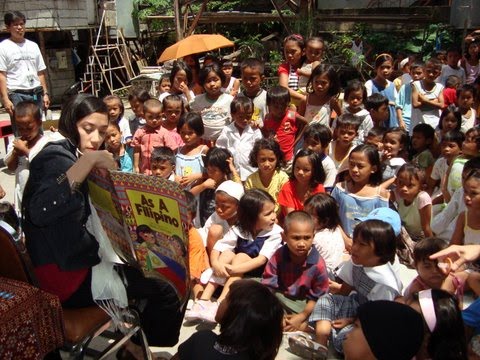
Catalysts from Assumption College in Manila have been consistently involved AAI's capitol-area programs and are active participants in our Peace Caravans that link Christian and Muslim students in some of the most impoverished Muslim areas of the capital. Recently, AAI's Kiddie Fun Day brought Catalysts from Assumption College together with underprivileged Muslim children in the Maharlika barangay [neighborhood] to generate understanding between the two cultures and to build cultural bridges.

AAI inspires and coordinates new intercultural relationships across the Mindanao community that has endured generations of armed conflict. AAI's Catalysts for Peace are young people who believe that guns cannot bring peace and that the power lies in the hearts and through the actions of the community. They are an integral part of AAI's overall mission and our objective of building peace, not only in the Philippines, but across the Region.

For more information on the events of 2008 in Mindanao:

http://www.amnesty.org/en/news-and-updates/news/mindanao-civilians-under-threat-from-milf-units-and-militias-20080822

http://www.amnesty.org/en/library/info/ASA35/008/2008/en

http://www.amnesty.org/en/library/info/ASA35/003/2009/en